Understanding Spatial Perception in Patty Rodger's Abstract Cityscape Paintings
- Patty Rodgers

- May 12
- 4 min read
Abstract cityscape paintings offer a unique way to experience urban environments. Unlike realistic cityscapes, these artworks do not rely on precise details or exact representations. Instead, they use shapes, colors, and forms to evoke the feeling of a city. One of the most fascinating aspects of these paintings is how they manipulate spatial perception. This post explores how abstract cityscape artists create a sense of space, depth, and movement, inviting viewers to engage with the city in new ways.
Introduction to Spatial Perception in Abstract Cityscapes
Abstract cityscape paintings offer a unique lens through which to view urban environments. By moving away from realistic representation, artists like Patty Rodgers invite viewers to engage with the essence of a city rather than its literal form.
Techniques Used in Abstract Cityscapes
Shapes and Forms: Abstract artists employ geometric and organic shapes to represent buildings, streets, and other urban elements, creating a dynamic sense of space.
Color Theory: The use of vibrant and contrasting colors can evoke emotions and alter perceptions of distance and depth.
Layering: Overlapping forms and colors can suggest movement and complexity, encouraging viewers to explore the painting from multiple angles.
Impact on Viewer Interaction
The innovative approaches taken by abstract cityscape artists foster a unique interaction between the viewer and the artwork. Instead of passively observing, viewers are encouraged to:
Engage Emotionally: The abstract nature of the works can evoke personal memories and feelings associated with urban experiences.
Interpret Space: Viewers may find themselves questioning their own spatial perceptions, as the abstraction challenges traditional notions of depth and perspective.
Explore Movement: The dynamic compositions can create a sense of flow, prompting viewers to 'move' through the cityscape as they explore the painting.
Conclusion
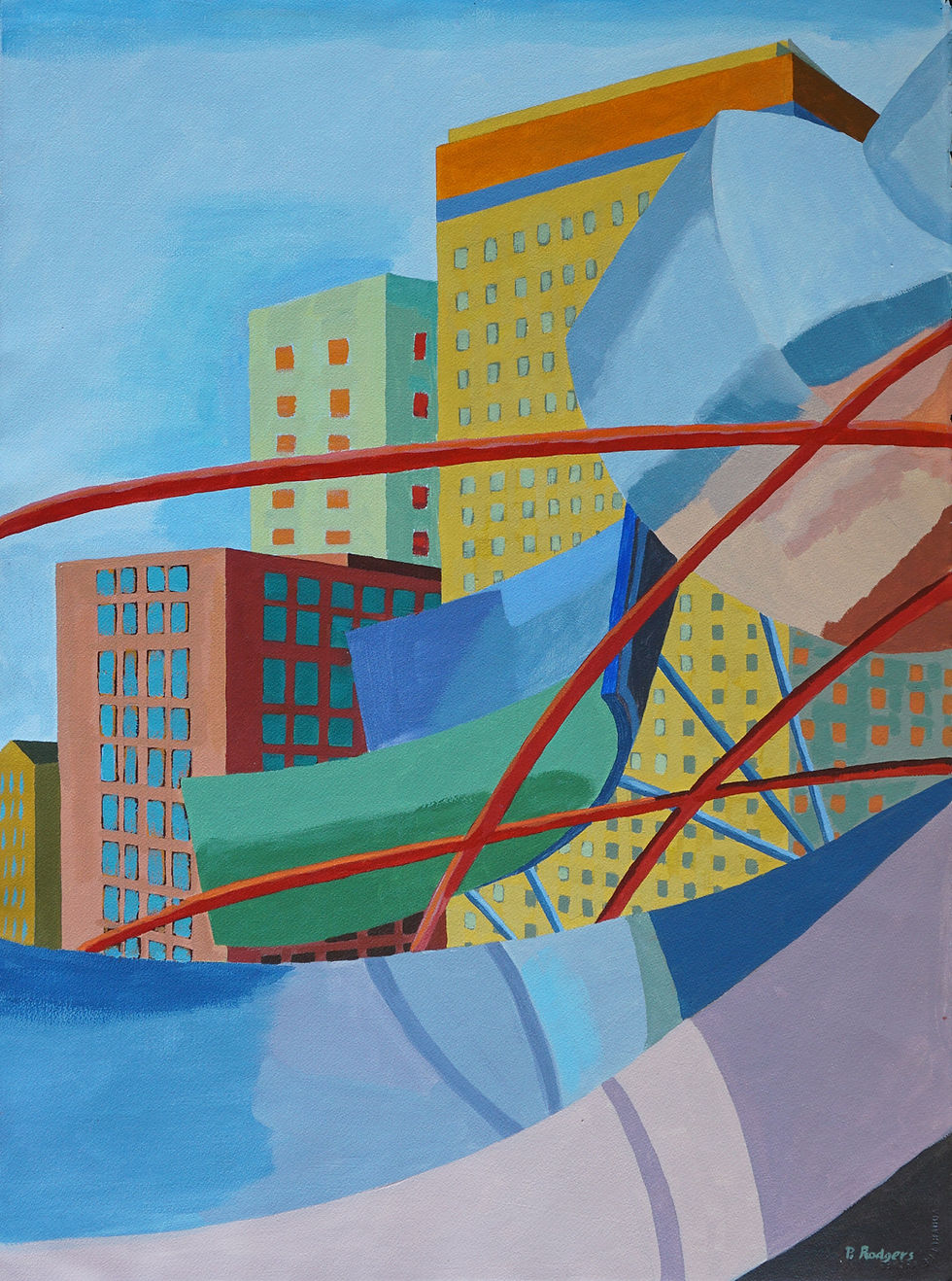
Patty Rodgers' abstract cityscapes exemplify how art can transform our perception of urban environments. By focusing on the essence of a city rather than its realistic portrayal, these artworks invite viewers to engage with space, depth, and movement in new and innovative ways.

Dallas From Above, oil on canvas, 24 x 30
How Abstract Cityscapes Challenge Traditional Space
Traditional cityscape paintings often focus on realistic perspective, using vanishing points and detailed architecture to create depth. Abstract cityscapes break away from these rules. They may flatten space, distort scale, or fragment forms. This approach challenges viewers to rethink how they perceive urban space.
For example, an artist might use overlapping rectangles and lines to suggest buildings and streets without clearly defining them. The lack of clear boundaries forces the eye to move around the canvas, piecing together the city from fragments. This creates a dynamic sense of space that feels alive and constantly shifting.
Techniques Artists Use to Create Spatial Depth
Even though abstract cityscapes avoid realistic depiction, artists still use several techniques to suggest depth and distance:
Layering: Placing shapes on top of each other creates a sense of foreground and background.
Color contrast: Warm colors tend to come forward, while cool colors recede, helping to separate planes.
Size variation: Larger shapes appear closer, smaller ones seem farther away.
Texture and brushwork: Rough textures can suggest proximity, while smooth areas feel distant.
Line direction: Diagonal and converging lines guide the eye into the painting, implying depth.
These techniques work together to build a spatial experience that feels both abstract and believable.
The Role of Perspective in Abstract Cityscapes
Perspective in abstract cityscapes is often non-linear or fragmented. Instead of a single viewpoint, artists may present multiple perspectives simultaneously. This approach reflects the complexity of urban life, where different angles and experiences overlap.
For instance, some paintings use a bird’s-eye view combined with street-level elements. This mix creates a layered spatial perception, where the viewer feels both above and within the city. The result is a more immersive and thought-provoking experience.
Emotional Impact of Spatial Perception
Spatial perception in abstract cityscapes does more than create visual interest. It also influences how viewers feel about the city. The way space is organized can evoke feelings of chaos, calm, excitement, or isolation.
Tight, overlapping shapes can suggest crowded, busy streets.
Open, sparse compositions may evoke quiet or emptiness.
Sharp angles and contrasting colors often create tension or energy.
Soft edges and blended tones can produce a sense of harmony or nostalgia.
By manipulating space, artists communicate their personal impressions of urban life, inviting viewers to connect emotionally.
Examples of Abstract Cityscape Artists
Several artists have explored spatial perception in abstract cityscapes with notable success:
Richard Diebenkorn used layered shapes and muted colors to create calm, spacious urban scenes.
Lyonel Feininger combined sharp lines and fragmented forms to capture the energy of city life.
Georgia O’Keeffe abstracted architectural elements to focus on form and light, creating a sense of depth through color and shape.
Studying these artists reveals how different approaches to space can shape the mood and meaning of a cityscape.
How to Appreciate Spatial Perception in Abstract Cityscapes
To fully appreciate spatial perception in these paintings, try these tips:
Observe the layers: Notice how shapes overlap and interact.
Follow the lines: See where your eye is drawn and how the composition guides your view.
Consider color relationships: Identify which areas feel closer or farther based on color temperature.
Reflect on your feelings: Think about how the spatial arrangement affects your emotional response.
Compare different works: Look at various artists to see how they handle space uniquely.
This active engagement helps deepen your understanding and enjoyment of abstract cityscapes.
Creating Your Own Abstract Cityscape
If you want to experiment with spatial perception, try creating your own abstract cityscape painting. Here are some practical steps:
Start with simple geometric shapes to represent buildings.
Use layering to build depth.
Play with warm and cool colors to separate planes.
Add lines that suggest streets or movement.
Don’t worry about accuracy; focus on how the composition feels.
This process can reveal new ways to see and express urban space.
The Future of Spatial Perception in Urban Art
As cities evolve, so does the way artists represent them. New technologies like digital painting and virtual reality offer fresh tools to explore space. Abstract cityscapes may become even more immersive, blending physical and digital experiences.
Artists continue to push boundaries, using spatial perception to capture the complexity of modern urban life. This ongoing exploration invites viewers to see cities not just as places, but as experiences shaped by space and perception.


Comments